A hotel’s website has one primary goal: help visitors confidently choose a stay and complete a booking. Yet many hotel websites make this process more complicated than necessary. They include too many menus, excessive promotions, crowded layouts, and information that distracts visitors from taking action.
In an industry where travelers compare multiple properties within minutes, simplicity has become a competitive advantage. A clean, focused website does not mean removing valuable information—it means presenting the right information at the right time.
Minimal, intuitive interfaces reduce decision fatigue, improve user experience, and help convert more visitors into direct bookings.
The Connection Between Simplicity and Conversion
Every visitor arrives at a hotel website with a purpose. They usually want to:
- Check availability
- Compare rooms
- Understand pricing
- Explore amenities
- Confirm the hotel fits their needs
- Complete a reservation
A successful website guides visitors through these decisions without unnecessary distractions.
When a website is overloaded with competing messages, users must spend more effort figuring out what to do next. This creates friction and increases the chance they leave before booking.
Simplicity removes obstacles and creates a clearer path from interest to action.
Why Cluttered Websites Lose Bookings
Many hotel websites attempt to showcase everything at once. They promote restaurants, events, loyalty programs, packages, local attractions, blog posts, and special offers all on the homepage.
While each element may be valuable individually, too much information creates confusion.
Common problems with cluttered hotel websites include:
- Unclear priorities
- Too many competing buttons
- Difficult navigation
- Overwhelming room choices
- Slow page performance
- Confusing booking journeys
When every element demands attention, nothing receives enough attention.
The Psychology of Simple Design
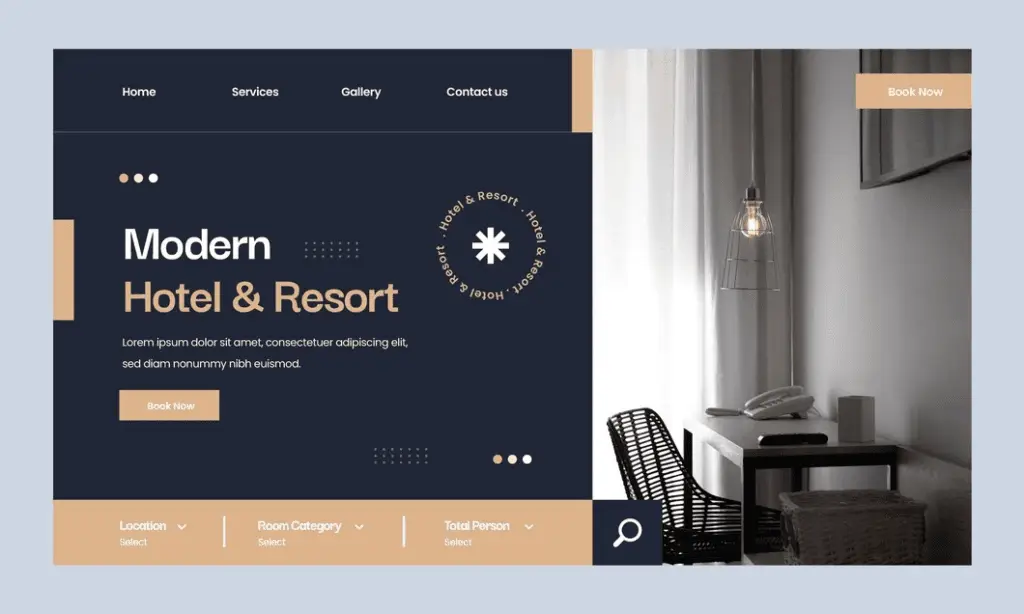
Simplicity works because it reduces the mental effort required to make decisions.
Travelers already process many factors when choosing accommodation:
- Location
- Price
- Reviews
- Room features
- Availability
- Policies
- Personal preferences
A simple website helps visitors focus on the information that matters most.
Reduced Decision Fatigue
Too many choices can delay decisions. A focused interface helps guests quickly understand their options and move forward.
Increased Confidence
Clear layouts communicate professionalism and reliability. Visitors often associate organized digital experiences with better-managed businesses.
Faster Task Completion
When users can easily find what they need, they spend less time searching and more time booking.
Focus the Homepage on One Primary Goal
The homepage is often the first impression a potential guest has of a hotel. Its purpose should be clear immediately.
A strong hotel homepage typically prioritizes:
- A compelling introduction
- Clear room or experience highlights
- Visible booking options
- Trust signals
- Key amenities
- Guest reviews
The booking action should never compete with unnecessary distractions.
A visitor should immediately understand:
- Where the hotel is located
- What makes it unique
- Why they should choose it
- How to reserve a stay
Simplify Navigation
Navigation is one of the most important parts of hotel website design.
Guests should not have to search through complicated menus to find basic information.
Effective navigation usually includes:
- Rooms
- Offers
- Amenities
- Location
- Contact
- Book now
Avoid hiding important information behind unclear labels or excessive dropdown menus.
Simple navigation reduces frustration and keeps visitors moving through the booking journey.
Make Booking the Easiest Action
The reservation process should be the simplest path on the website.
A well-designed booking flow should:
- Display availability immediately
- Require minimal information
- Clearly show prices
- Explain policies
- Offer secure payment
- Confirm reservations quickly
Every additional step creates another opportunity for abandonment.
The best booking experiences feel almost effortless.
Use Visual Hierarchy to Guide Attention
A simple design does not mean every element looks identical. Effective simplicity depends on creating a clear hierarchy.
Important elements should stand out through:
- Size
- Placement
- Contrast
- Spacing
- Typography
For example:
Primary Action
The “Book Now” button should be easy to find and visually distinct.
Supporting Information
Room details, amenities, and policies should support the decision without overwhelming the visitor.
Additional Content
Blogs, galleries, and promotional content should enhance the experience rather than distract from booking.
Present Room Options Clearly
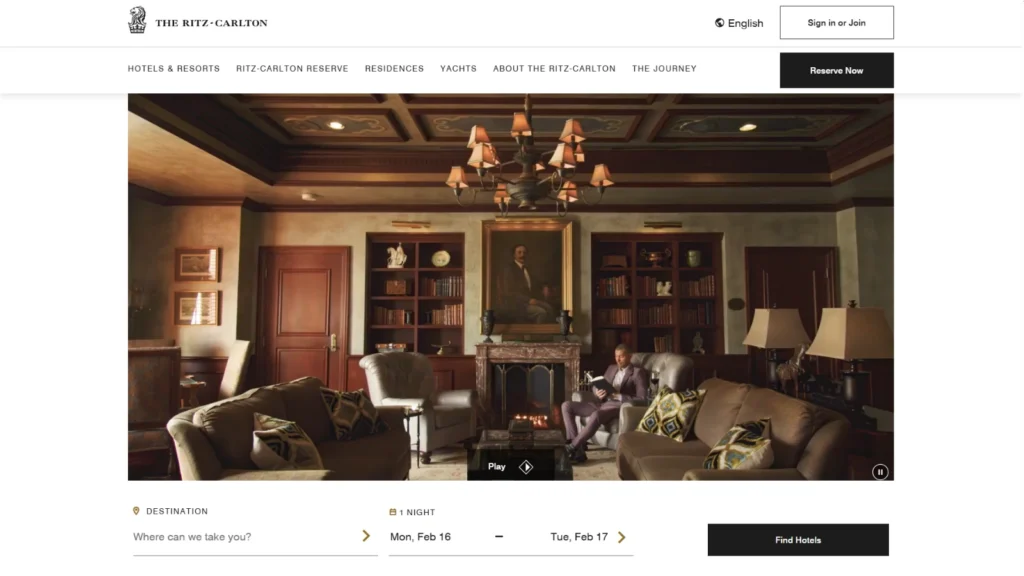
Hotels often struggle with displaying multiple room categories.
Too much detail can confuse guests, while too little information creates uncertainty.
A simple room presentation should include:
- Clear room names
- High-quality images
- Key features
- Capacity information
- Main differences between options
- Transparent pricing
Help visitors understand why each room category exists instead of forcing them to compare endless details.
Remove Unnecessary Friction
Small obstacles can have a major impact on conversion rates.
Common sources of friction include:
- Long forms
- Hidden pricing
- Repeated information requests
- Slow booking tools
- Unclear cancellation policies
- Difficult mobile navigation
A simple website identifies these obstacles and removes them.
Performance Is Part of Simplicity
A visually simple website can still fail if it performs poorly.
Fast-loading websites create smoother experiences and encourage visitors to continue exploring.
Performance improvements include:
- Optimized images
- Efficient code
- Reduced unnecessary animations
- Faster booking integrations
- Mobile optimization
Speed supports simplicity by allowing users to access information without waiting.
Build Trust Through Clear Communication
Minimal design should not remove important trust signals.
Guests still need reassurance before booking.
Effective simple websites include:
- Guest reviews
- Ratings
- Secure payment information
- Clear policies
- Contact details
- Authentic photography
The goal is not to provide less information—it is to provide information more effectively.
Personalization Without Complexity
Simple websites can still deliver personalized experiences.
Examples include:
- Recommended room options
- Relevant packages
- Returning guest recognition
- Location-based suggestions
- Customized offers
The key is presenting personalization naturally without adding unnecessary complexity.
How to Simplify a Hotel Website
Hotels can improve conversion rates by following a structured approach.
Step 1: Identify the Main User Goals
Understand what visitors need most:
- Finding rooms
- Checking prices
- Booking quickly
- Learning about the property
Step 2: Remove Unnecessary Elements
Review every page and ask:
- Does this help guests make a decision?
- Does this support booking?
- Is this information needed now?
Remove anything that distracts from the primary journey.
Step 3: Improve Content Structure
Organize information clearly with:
- Short sections
- Descriptive headings
- Scannable text
- Strong visuals
Step 4: Test User Behavior
Use analytics and user feedback to identify:
- Where visitors leave
- Which pages create confusion
- Which booking steps cause abandonment
Continuous improvement keeps the experience aligned with guest expectations.
Simplicity Creates Better Digital Hospitality
A hotel website should feel like a helpful concierge, not a complicated catalog. The best digital experiences guide guests naturally, answer important questions, and make booking feel easy.
Minimal design succeeds because it respects the visitor’s time and attention. By removing distractions, improving navigation, simplifying booking flows, and presenting information clearly, hotels can create websites that convert more effectively.
The goal is not to show everything at once. The goal is to show guests exactly what they need to make a confident decision.
In a crowded hospitality market, simplicity is not a limitation—it is a strategy. Hotels that create focused, intuitive digital experiences are better positioned to increase direct bookings, strengthen trust, and turn website visitors into loyal guests.